@iau-wgsn.bsky.social
BlueSky - our IAU edu infos
Please Contact Us
Channel
@iau-wgsn.bsky.social
BlueSky - our IAU edu infos
Please Contact Us
Channel
The “Fördergemeinschaft für Naturwissenschaftliche Jugendarbeit” (FNJ) was formed from a regulars’ get-together and legally established as a German association (“Verein”) in Bonn, West Germany, the 1950s.
At that time, after the second world war, the policy in West-Germany was strongly supportive for studies of humanities subjects but not of STEM – of course also influenced by the threats that physics and chemistry had put to the world in shape of new weapons in both world wars. Yet, the peaceful applications of science topics and in particular the advantage of understanding nature (natural history as a predecessor of modern science) are or should be interesting for humans in general: Understanding the world and reflecting options is essential for democratic societies.
Back then, the FNJ has been managed by the high school teacher (“Oberstudienrat”) Hochstein and some friends with the goal of making science studies more appealing to young people by supporting activities they considered sexy and engaging (e.g., summer camps, star parties).
NOTE
East Germany did not have the problem of avoidance of science topics – in contrast, the communist regimes strongly supported, embraced and promoted science education and activities. The technical and technological progress was a fundamental part of the propaganda. Leisure activities in the STEM field were offered through the so-called ‘Kulturbund’ (Federation for Cultural Activities) just as a matter of course as dance and singing events.
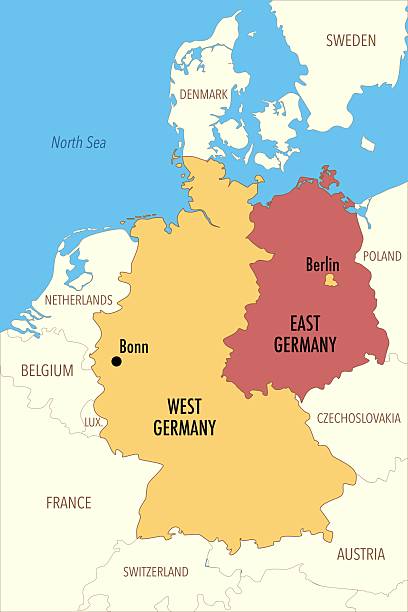
According to (West-)German law, seven people are necessary to form an association. However, in the post-Hochstein era, there were only three or four people running the FNJ. Actually, for the goals of this venture (the support of STEM spare time activities and fun with STEM topics), it is not necessary to have many members. We only need few, but highly supportive & committed people. In the 1990s and early 2000s, the passionate and supportive physicist Uwe Reimann managed the FNJ almost alone or in close collaboration with one or two people.
Hence, after Uwe Reimann had stepped back from the chair in 2010, we aimed at restructuring this organisation, explored the (then up-to-date) landscape of funding opportunities and government contacts, and moved to Berlin.
Thanks to some new donations and tireless consideration of legal options, the association was converted into a tiny foundation (certificate date: 2016) – hoping for opportunities to grow.
The changes of the 2010s not only addressed the legal structure but also enriched the goals:

© 2025All Rights Reserved, Safari WordPress Theme